
8 things I learned using Claude Code to do my job better
A chapter manager's honest account of the setup, the accounts, the voice, and publishing straight to eovietnam.org with no developer in the loop
I help run EO Vietnam. I am not an engineer. A few months ago the idea that I would write a blog post and put it on eovietnam.org myself, no developer in the loop, would have sounded absurd.
Now it is just how I work. Here are eight things I learned getting there, in the order they surprised me.
1. The hard part is the setup, and it happens only once
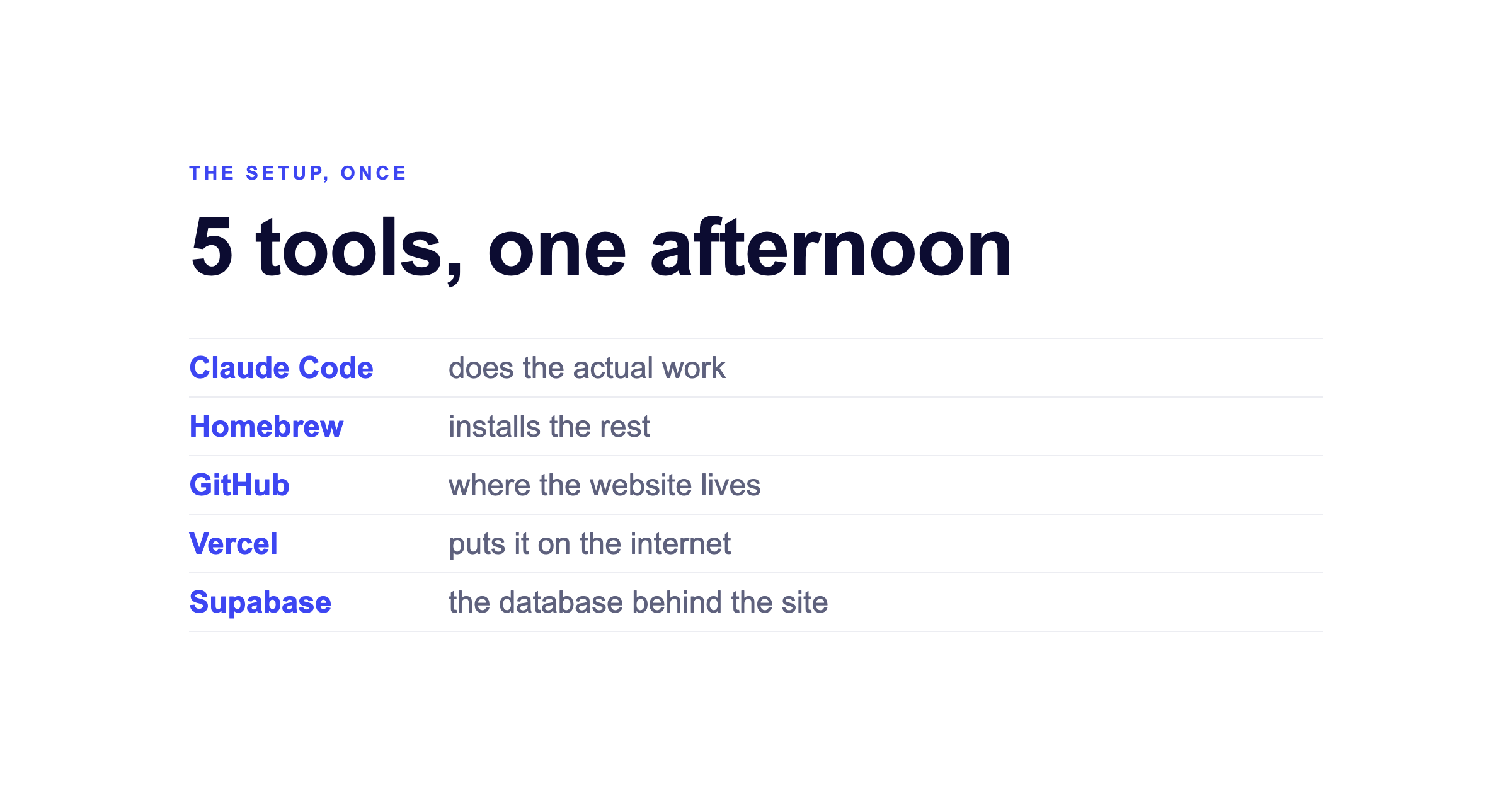
Nobody handed me a magic button. I got trained, and the first thing I did was install what our team calls the developer stack: the set of tools that lets a normal laptop work alongside the engineers.
It was the least fun day and the most important one. Once it was done, it stayed done. Everything after that was the actual job, not more setup.
2. You do not have to understand the plumbing to use it
Partway through the install I ran something called Homebrew and had no idea what it was. I installed other things with names that meant nothing to me.
Here is what I wish someone had told me: you do not need to understand all of it on day one. Homebrew, it turns out, is just a way to install software on a Mac. That is the whole mystery. The stack is plumbing. You get it working once, then you mostly forget it is there.
3. A few accounts, each with one job
After the stack came the accounts. Three of them, and once I knew what each one was for, the fog lifted.
I did not need to know how any of them worked under the hood. I needed access. That was an afternoon, not a career change.
4. Cloning put the entire website on my laptop, in sync with everyone
Someone sent me the link to the EO Vietnam repository, the GitHub address of the site. With Claude Code, getting it onto my computer was one step: clone it. Cloning makes a full copy of the whole website on my laptop that stays connected to the master copy.
So now the real site sits on my machine, in sync with the version everyone else works from. When the engineers change something, I pull it. When I add a post, it goes back to the same place. I am working inside the real website, not a marketing sandbox someone has to copy things out of later.
5. It already knows our voice, because our voice is written down
This is the one that genuinely surprised me.
EO Vietnam has a way of writing. Sentence case, not title case. No thought-leadership fog. No "in today's fast-paced world." We say what we did and what happened. That voice is not a vibe, it is written down as skills, reusable instructions Claude Code loads before it helps me write.
There is one for our brand, the exact blues, the typography, the rule that text stays in the safe center of an image. One for our writing voice. One built from our own social performance data that knows which posts actually land.
6. The images live with the words
A post is not just text. The cards at the top of our posts, the bold typographic ones on deep navy, come from the same place.
We keep a working images folder right in the project. When a post needs a visual, the assets sit next to the writing, and the brand skill knows the colors and layout rules to build on-brand cards without starting from scratch. Words and pictures live together and go live together.
7. Publishing went from "send it and wait" to shipping it myself
The old way had a shape. I write something in a document. I send it to whoever can publish. I wait. I spot a typo after it is live and send another message. Everyone means well and it is still slow.
- I draft in the project, with the voice and brand already loaded
- I add the images from the working folder
- It goes onto the website
The gap between "I have something to say" and "it is live" basically closed.
8. I did not learn to code, I learned to use the tools the builders use
This is the real lesson, and it is the one I would tell any other chapter manager.
I still cannot write the website. I do not need to. What changed is that I stopped being on the outside of it. I learned to use the same tools the engineers use, well enough to do my own job inside them, and the wall between writing something and shipping it quietly came down.
The proof is the post itself
The post you just read got here the way it describes: drafted in the project with the chapter's voice already loaded, illustrated from the working images folder, and published straight to the site.
If you are curious what EO Vietnam is building, chapter and codebase both, come find out.