
A Founder Friendly Breakdown Of What Happened And What To Do Next
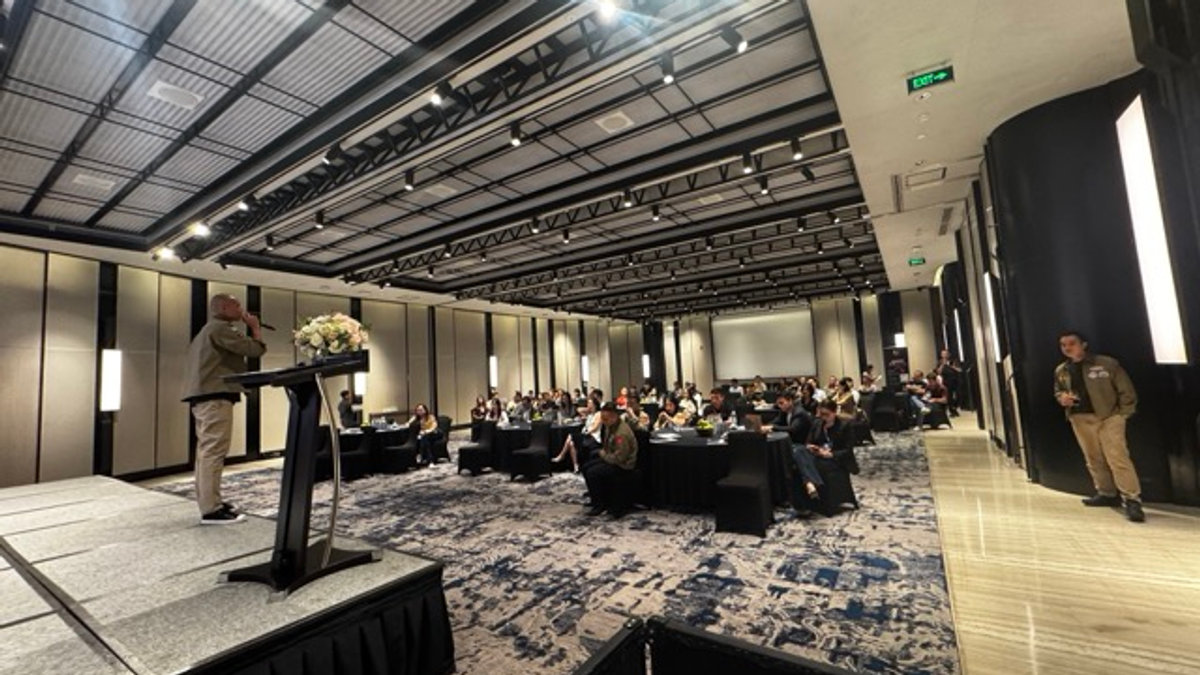
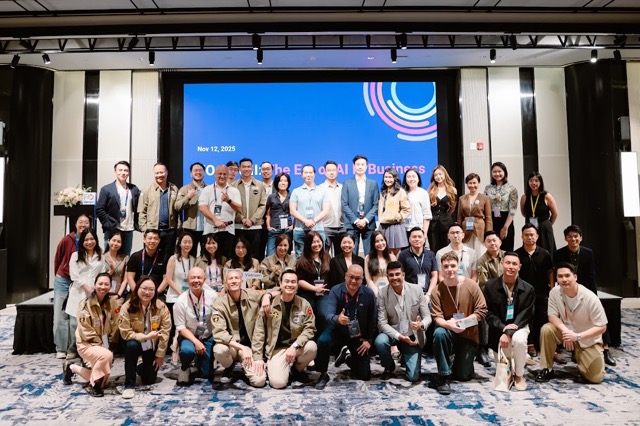
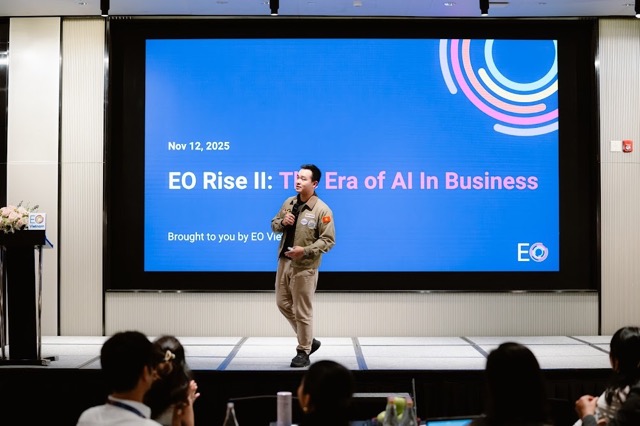
On November 12, seventy entrepreneurs and business leaders packed into the Hilton Saigon for RISE II: The Era of AI in Business. The room felt more like a private founder forum than a public event. Everyone was there for one reason: to figure out how to actually use AI to win in the next three to five years, not someday in the distant future.
What followed was three hours of high energy learning, real talk, and very practical advice from people who are already deep in the game.
TK Nguyen and GAM: Building Championship Teams With Psychology And AI
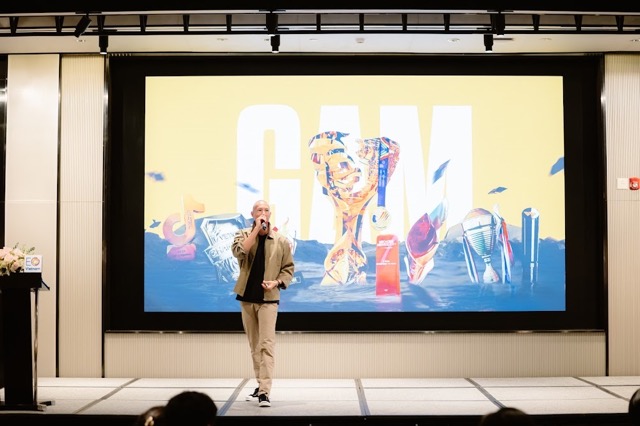
TK Nguyen, CEO of GAM Entertainment, came in hot. If you have followed GAM at all, you know they are not just another esports team. They are the standard. GAM has become the most decorated League of Legends team in Vietnam, with a record number of VCS titles and repeated appearances on the international stage at events like Worlds, MSI, SEA Games, and the Asian Games.
TK brought that same competitive intensity to the stage. His talk felt like a locker room speech before a final, but aimed at founders and executives instead of pro players.
He showed that GAM's success is not just about individual talent. It is about how they architect the team. They use MBTI, DISC, and StrengthsFinder to understand every player in depth. How they think. How they handle pressure. How they communicate. What motivates them and what triggers them.
Then they layer AI supported analysis on top of that data to make smarter decisions about roles, communication patterns, and leadership structure. Visionaries go into high pressure, high impact roles. Integrators and stabilizers support consistency and structure. The team is designed, not guessed.
The most powerful part for the room was how directly this translates to business. The same approach can be used on executive teams, management teams, and even cross functional squads in any company.
TK did not just inspire. He equipped. He shared a full handout with the exact prompts they use so that attendees could run similar analysis on their own teams. Get them here and his slides here.
His core message was simple and very hard to unhear.
Esther Nguyen and POPS: Virtual Influencers On The World Stage
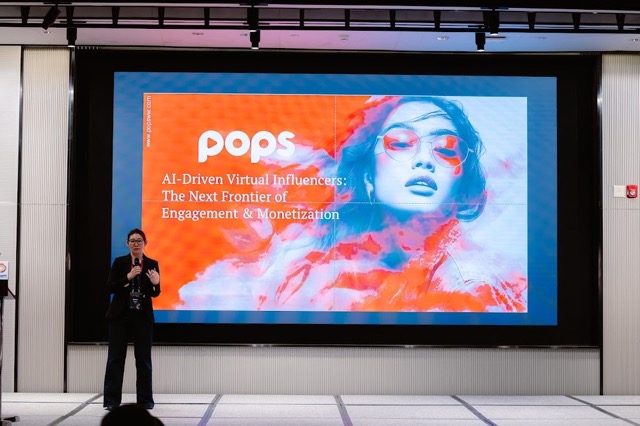
If TK brought the fire, Esther Nguyen, Founder and CEO of POPS, brought the shock and awe.
POPS is one of Southeast Asia's leading digital entertainment companies. The company runs a large multi platform network across YouTube, TikTok, Facebook and more, and works with thousands of content partners globally. At RISE II, Esther shared that POPS now touches a global ecosystem of roughly 50,000 influencers and creators. She is not just talking about Vietnam. She is operating on the world stage.
Her focus was the virtual influencer market. Multiple reports now project this market reaching well over 150 billion dollars by 2032, driven by AI generated characters that engage audiences at scale.
Esther explained why brands are taking this seriously.
Her example of Zoe, POPS virtual influencer with more than 300,000 followers, made it very real. Zoe posts outfit videos where viewers can click and buy directly. TikTok sends her products daily to review.
For the audience, it is entertainment. For brands, it is a performance machine.
She then walked leaders through how to build a virtual influencer the right way:
The big human question came up quickly. Can people really connect with something that is not real. Her answer was grounded and relatable. There is always a human creative team behind the character. And people already form emotional bonds with anime characters, cartoons, and fictional heroes. Virtual influencers are simply a new format for something audiences already understand.
For brands, the advantages are hard to ignore. Higher profit margins. Complete narrative control. Always on availability with no overtime. No risk of a human influencer suddenly trashing the brand with one bad decision.
Esther also went tactical. Capture attention in the first ten seconds. Keep videos in the 30 second to 3 minute range. Protect your virtual IP just like any other digital asset. Expect disclosure rules for AI influencers in the future, but do not use that as an excuse to sit on the sidelines now.
She connected it back to gaming and esports as well. Team mascots can become AI influencers. Players who are too busy training can be represented by digital twins built with tools like HeyGen. Master prompts act like brand guidelines that keep the AI personality on track.
Her message to founders was very clear.
The Panel: Three Concrete Moves For Monday Morning
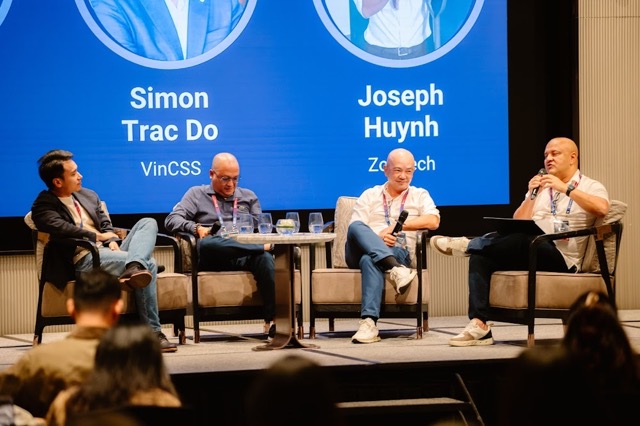
After two heavy hitting keynotes, the panel took everything down to the level of Monday morning action.
Harley Trung from CoderPush.com, Joe Huynh from Zoi.tech, and Simon Trac Do from VinCSS.net joined moderator Dave Hajdu from AI-Officer.com for a session that answered the question every founder has.
The Panel: What To Focus On In The Next 6 to 12 Months
By the time the panel started, the question in the room was simple. Out of everything we heard, what should leaders actually focus on in the next year.
Joe walked through what he calls the "scissor" approach. On one side, you consolidate into a governed AI platform so usage moves out of random tools and into one stack you control. On the other side, you empower end users with no code tools like AppSheet so domain teams can build their own workflows inside clear guardrails.
You ask people what they do, where the pain is, and what gains they want, then use AI to surface automations and ship real workflows fast. It hits ROI and reduces shadow AI at the same time.
Harley focused on treating AI as a teammate instead of a shiny tool. That requires building "instruction skill" across the company. People need to get good at talking to AI, using voice, giving rich context, and iterating quickly instead of waiting for the perfect prompt.
Combine that with centralized data and you start building an organizational capability that compounds.
Simon brought in the security and risk perspective.
In a world where employees are constantly pasting information into AI tools, that number is not going down. His push was to move toward secure by design and what he calls velocity cybersecurity. Security needs to be embedded across the full delivery lifecycle and move at the speed of AI, not after the fact and not as a blocker.
From a founder point of view, the most actionable moves that came out of the panel looked like this:
Joe: Consolidate into a governed AI platform, run Job, Pain, Gain to source automations, and give domain teams tools like AppSheet so they can build under guardrails instead of waiting on a central team.
Simon: Name an AI and security champion, embed security into every delivery phase, and train people for human targeted, AI enabled attacks while keeping pace through velocity cybersecurity.
Harley: Build instruction as a core skill by getting people to talk to AI with richer context and voice, centralize data so AI has something to work with, and push teams to iterate quickly instead of chasing perfection.
The panel also surfaced a few blind spots leaders need to watch.
Joe's platform play can get stuck if change management and data readiness are not handled properly.
Simon's approach can be perceived as a brake if security is not tightly aligned with product velocity and developer experience.
Harley's skill building can stall out if governance and data quality are weak, because even great prompts cannot rescue bad inputs or chaotic systems.
Dave closed the session by pointing to a sobering finding from MIT Sloan: roughly 95 percent of organizations are getting zero measurable return from their generative AI programs. The message to the room was clear. The problem is rarely the technology. It is leadership, data alignment, and execution.
Leadership In The AI Era: Turning Insight Into Capability
That insight set up the final call to action. AI will not fix weak leadership. It will expose it even more.
If you take the ideas from RISE II seriously, the next logical step is to invest in leadership training that is built for this moment.
Leadership in the AI Era is EO Vietnam's answer. It is a six month leadership training program designed specifically for senior leaders and high potential team members. Each session combines one hour of focused leadership and AI learning with one hour of sharing and accountability so people actually implement what they learn.
The goal is not to turn your managers into coders. The goal is to build leaders who can think clearly, communicate with impact, design human plus AI workflows, and guide teams through real transformation. Participants leave with stronger leadership skills, a practical understanding of both Generative and Agentic AI, and real business improvements already completed inside their company.
If you are serious about leadership training that fits the AI era instead of ignoring it, this is the program to look at next: https://www.eovietnam.org/training
Applications close January 10, and the next cohort starts January 14.
Picture Gallery
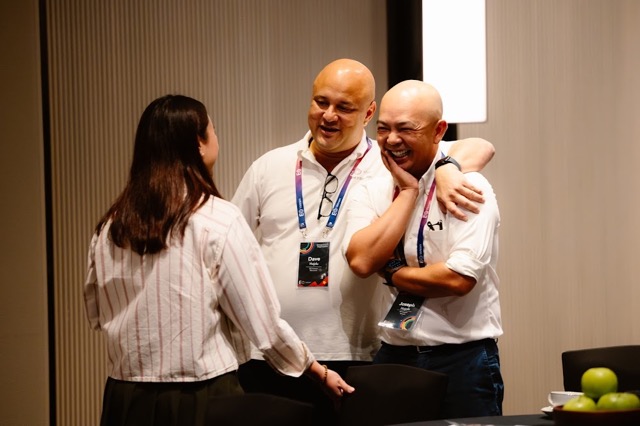
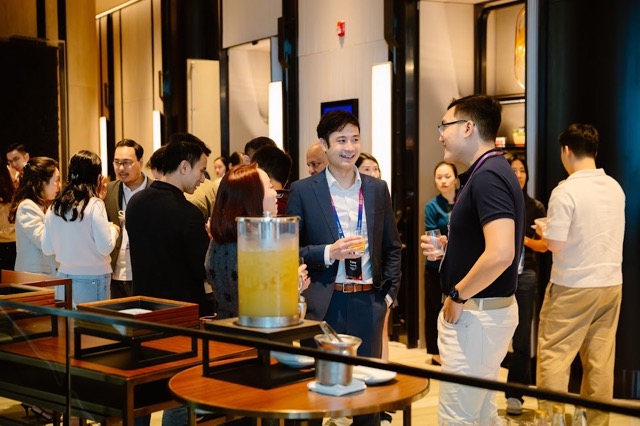
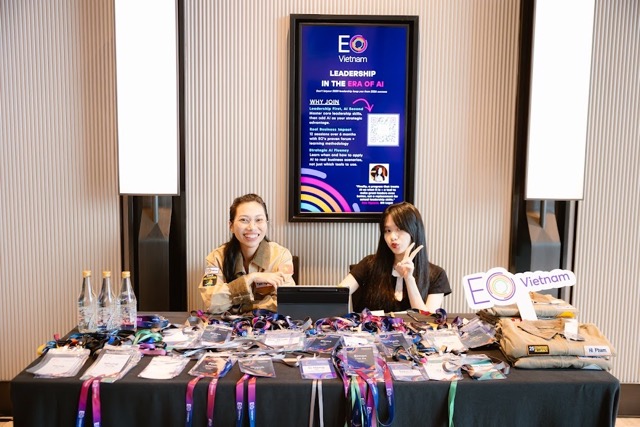
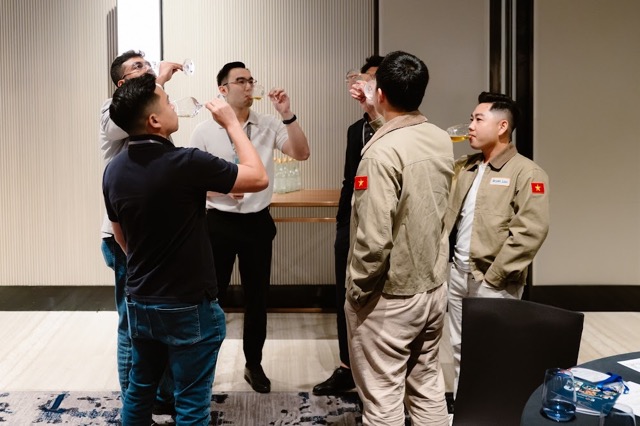
Scroll through the photo gallery from RISE II to feel the energy in the room. You will see TK in full flow, Esther unveiling the world of virtual influencers, founders leaning in during the panel, and the post event networking where new partnerships and ideas started forming. It is a snapshot of what happens when ambitious leaders in Vietnam come together to learn, share, and build the future of business in the AI era.

Check out the full gallery here 👉 https://photos.app.goo.gl/A1nz7BA3hmnMenpw8