
Leading from the top: what our president wants founders to know about leadership in the AI era
EO Vietnam president Le Tuan Anh on why leading yourself comes before leading anyone else
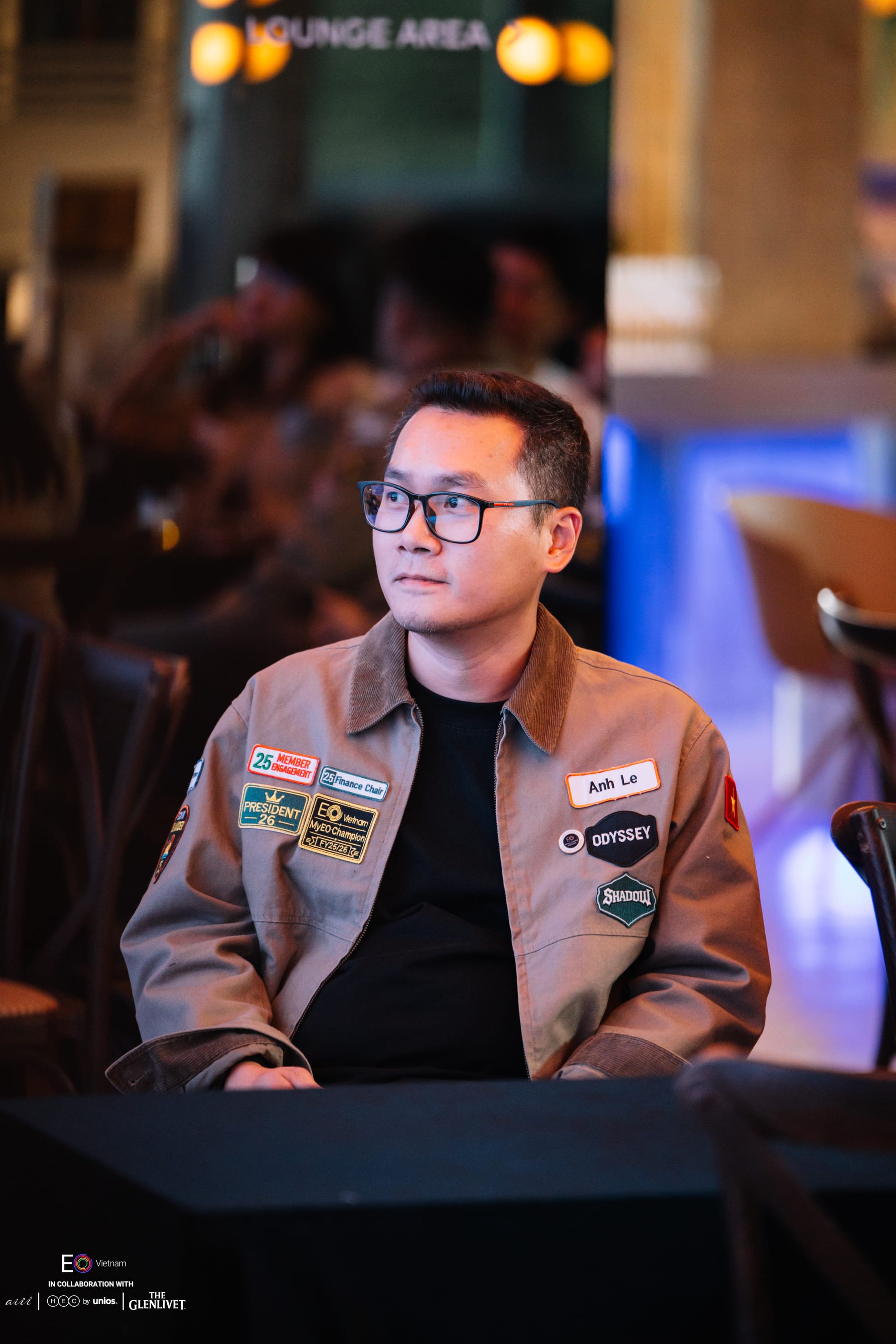
Can a founder actually lead a company if they've never learned to lead themselves?
It's not a rhetorical question inside EO Vietnam. It's the same thing members keep telling president Le Tuan Anh in the forum, in one form or another: building the product got them here. Leading the company is the harder part now.
EO Vietnam is the local chapter of a global network built around exactly that kind of pressure-testing. Forum, small peer groups where founders bring real problems to people with no reason to be polite about the answer, is where the gap between building and leading gets said out loud most often, long before it ever reaches a program brief. Two things made the gap harder to ignore this year. Members are scaling faster than they used to, and AI is compressing the timeline on everything underneath that growth: decisions, hiring, how a team works day to day.
The program's answer is a hierarchy, not a menu: lead yourself, lead others, lead the organization, each level depending on the one before it. EO Vietnam built the program together with Brooks C. Holtom, PhD, and the hierarchy comes directly from his own research and teaching. It's deliberate. A founder can be excellent at leading a team and still run the organization into the ground if the habits underneath were never solid.
Skip the first level, and the other two are borrowed, not earned.
The productivity trap
Most leadership styles form under pressure and go unexamined for years, usually right up until a ten-person team becomes fifty and the same instincts stop working. AI has made that blind spot easier to miss, not harder. A founder can produce a board deck, a hiring plan, and a set of meeting notes before lunch now, and mistake all that motion for leadership. What a team actually needs hasn't changed. Clarity. Judgment. A reason to stick around.
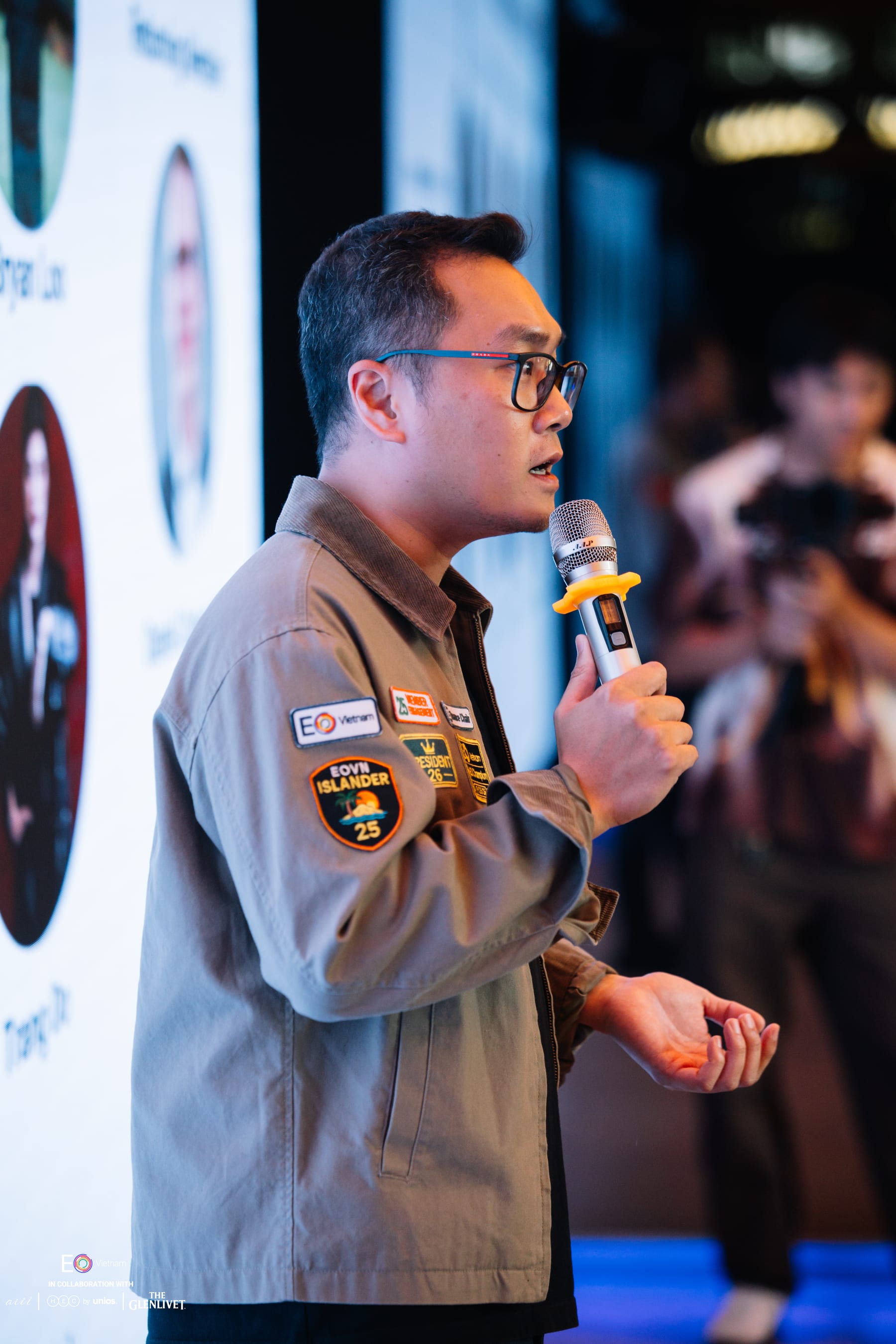
There's a second cost sitting underneath the obvious one. When a model can answer almost anything in seconds, the instinct to work through a hard call yourself gets less exercise, not more. Founders who never treated leadership as a skill worth deliberately practicing are the ones who stall as the company grows, because talent was never going to substitute for the practice.
Busy is not the same as capable.
The part that doesn't automate
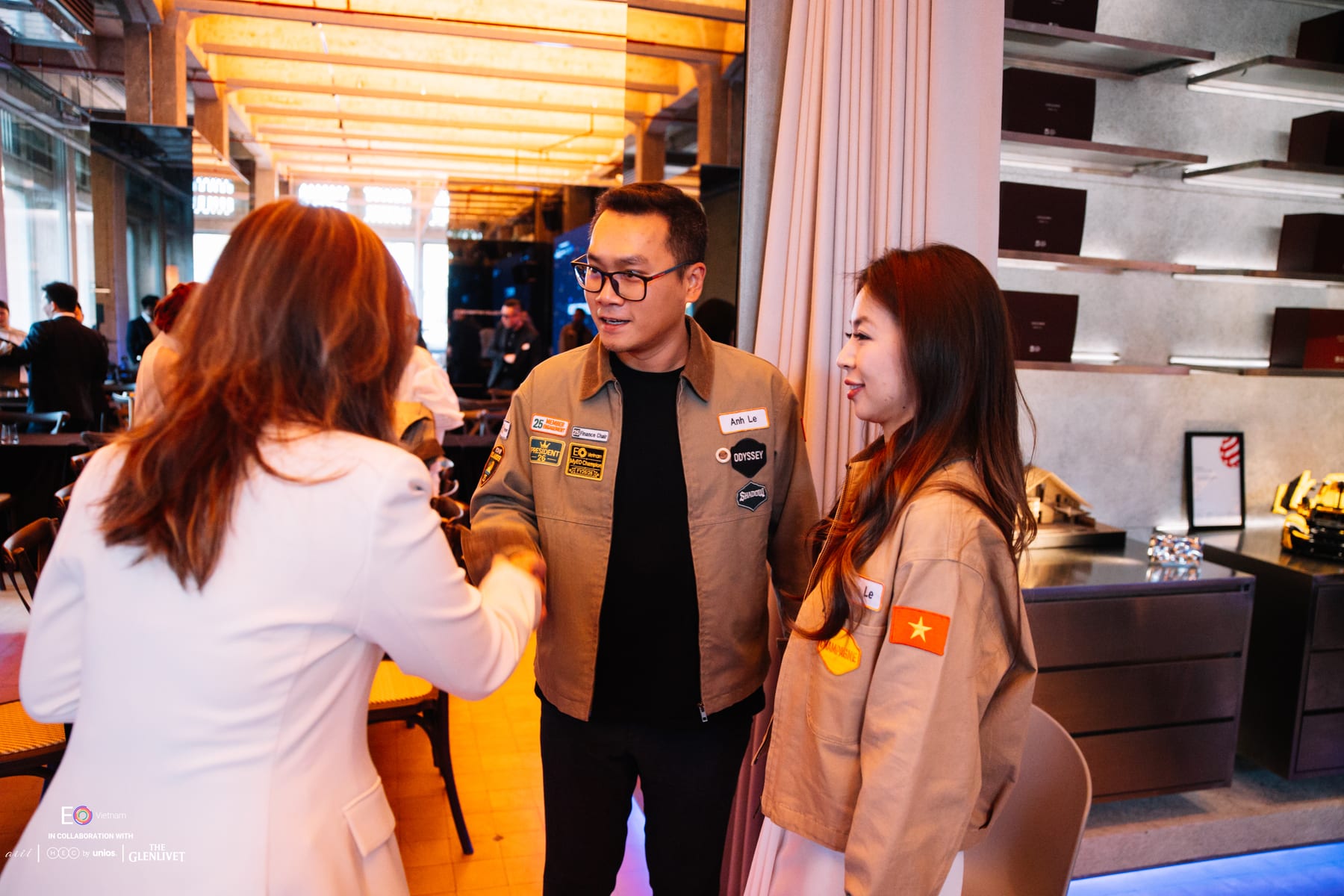
Coaching a hire who's quietly failing. Holding your ground in a negotiation without burning the relationship on the way out. Feeling a meeting go quiet half a beat before someone hands in their notice. None of it is teachable from a slide, and none of it survives contact with a model. These are reflexes, and reflexes only get built one way: badly, a few times, with people around you who'll tell you the truth about it afterward instead of what's polite. The program runs on exactly that, not a curriculum sold on top of it.
How EO Vietnam knows it's working
Not a usage statistic. A timeline. A bad hire, a fuzzy strategy, a founder who keeps avoiding one hard conversation, all of it compounds faster now, because everything downstream of a decision moves at the same new speed. The mess scales exactly as fast as the good ideas do, which is why the chapter treats this as more than one founder's personal growth story. A member leading badly costs the whole community something: a team that leaves, a company that stalls, a peer group missing one more perspective at the table.
The clearest marker of change shows up roughly six months after someone starts leading differently, and it was never going to show up on a dashboard.
The pillar with no finish line
Asked which of the three pillars still challenges him even now, Tuan Anh didn't reach for the diplomatic answer. One of them, he admits, has no finish line, not even for the person running the chapter.
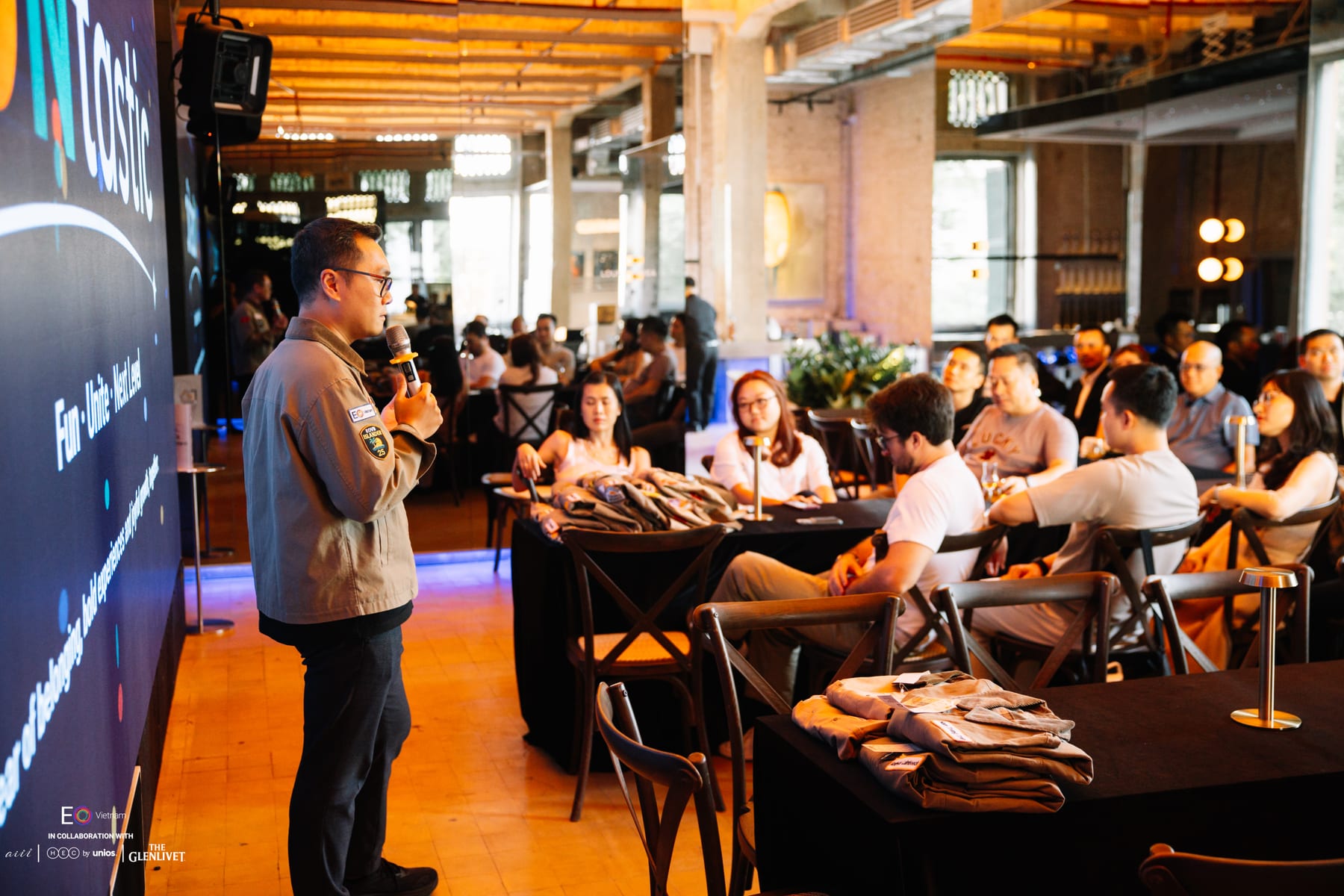
Being the most visible person in the chapter doesn't shrink that problem. It raises the price of it, since his own missteps show up faster and cost more than anyone else's. Forum exists precisely for this. Nobody, including a chapter president, is expected to work on it alone. The program runs on the same logic. Peers who catch the blind spot before you do, and say so, rather than a framework you're handed once and expected to apply solo.
What's next
He won't give away specifics on the next session, but the shape of it is clear enough without them.
A year out, the real proof is a specific kind of sentence other people start saying about a founder: someone walking into the conversations they used to dread, the hard feedback, the tense negotiation, the honest talk with a co-founder, and handling all of it steadier than before.
The person who greenlit this program has made his case. No committee gets to grade it. The founders sitting across from their own teams a year from now are the ones who will.
About Entrepreneurs' Organization (EO)
Entrepreneurs' Organization (EO) is a global, not-for-profit membership community of 20,000 leading business founders and owners representing more than 90 countries and 220 chapters worldwide. Founded in 1987, EO helps entrepreneurs move the world forward by unlocking their full potential through the power of trusted connections, leadership development, and premier learning opportunities that support the whole person. Learn more at eonetwork.org.