
What happens when the family business becomes yours to run
The biggest change has to be going from being an employee to being an owner.
That was Hoang Le. He and his siblings took over the family business in July 2024: IMGH Investment JSC, the developer behind An Cựu City, a 33-hectare urban area in Hue, established by the generation before them in 2008.
Bryan Loo, originally from Malaysia, is the third generation in Far East Foam, founded there in 1971. For the past five years he has run its operations in Vietnam, from the factory to the mattress brands it carries.
The companies kept running through the handover. Both men are EO Vietnam members, and we asked them the same questions. What did it look like from the inside? And what did they keep, and what did they change, now that the company is theirs to run?
- 168 units finished and handed over on Hoang Le's An Cựu Galleria project in Hue, earlier this year.
- 2 must-hit goals each month in the timeline Hoang Le sets with his team.
- Around 1,200 employees at NS Millennium now, after consolidating from around 1,500 down to 400 to 500.
- 4 weeks is the shipment buffer Bryan Loo moved to this year, up from around two weeks.
Flying the plane and fixing it
Hoang Le, vice chair of IMGH Investment JSC, runs the residential real estate developer in Hue with his siblings.
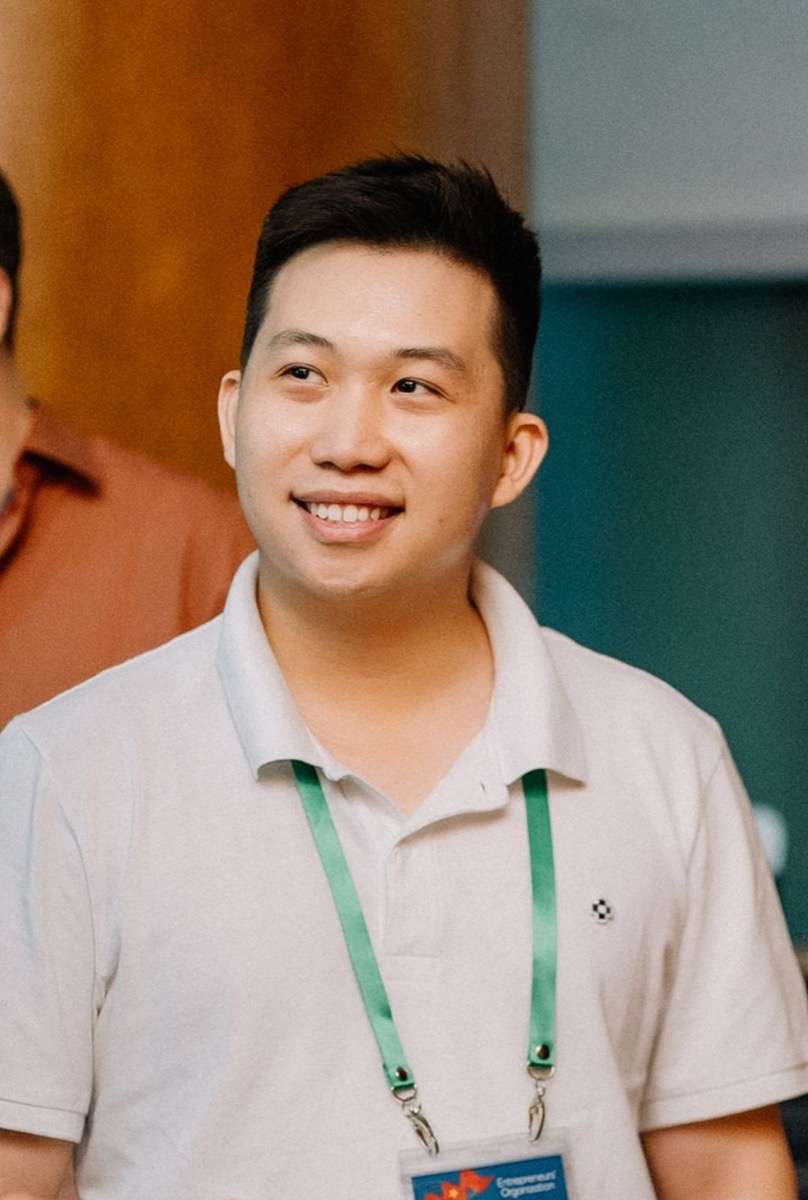
The first months after taking over were the hard ones. Every decision and every question that reached him and his sister felt like it could decide whether the company survived. Scary, Hoang recalled, and stressful; they walked themselves through it with their employees, their advisors, friends and family.
Owning it also meant paying attention to everything; whatever happens in the company now lands on both of them.
The company they stepped into was in the middle of everything, with plans that no longer fit. They redid the plans and changed how people worked, and it took about a year to get some sort of system going. They have been building on it ever since, and he has a line for it.
You're basically flying a broken plane, and you have to keep going as you fix the plane at the same time.
He and his sister split the work by the old saying, play to your strengths: investment and finance on her side, project management and design on his. His days move between planning, decisions and coordination across departments, and the mix is never fixed: one day project development, the next finance, the day after HR.
The division of labor took work of its own. “That's also an ongoing process,” he said. “It could be forever.” Like any two partners who are also siblings, they don't always agree. “Within the company we have to learn to be business partners and prioritize what's best for the company.”
The timeline he sets with the team at the start of each month and quarter ranks the work. He calls it a North Star. He marks two of the month's goals as the bottom line, the ones that get hit no matter what. A task budgeted at five hours sometimes takes twenty; with the bottom line set early, the team drops smaller tasks on its own, without going through him. That proactivity, he says, is one of the biggest things he is trying to build.
The milestone he points to is the An Cựu Galleria shop house project in Hue, 168 units finished earlier this year and handed over to customers. Every department put in its share, her specialty and his.
Even today, it's an ongoing process of learning and figuring things out. Every day brings new challenges and opportunities for growth.
Still running at full speed
Bryan Loo co-founded NS Millennium Vietnam, the family's own factory, making polyurethane foam for furniture producers, and mattresses for home and export. Asked for one measurable change, he picked headcount.
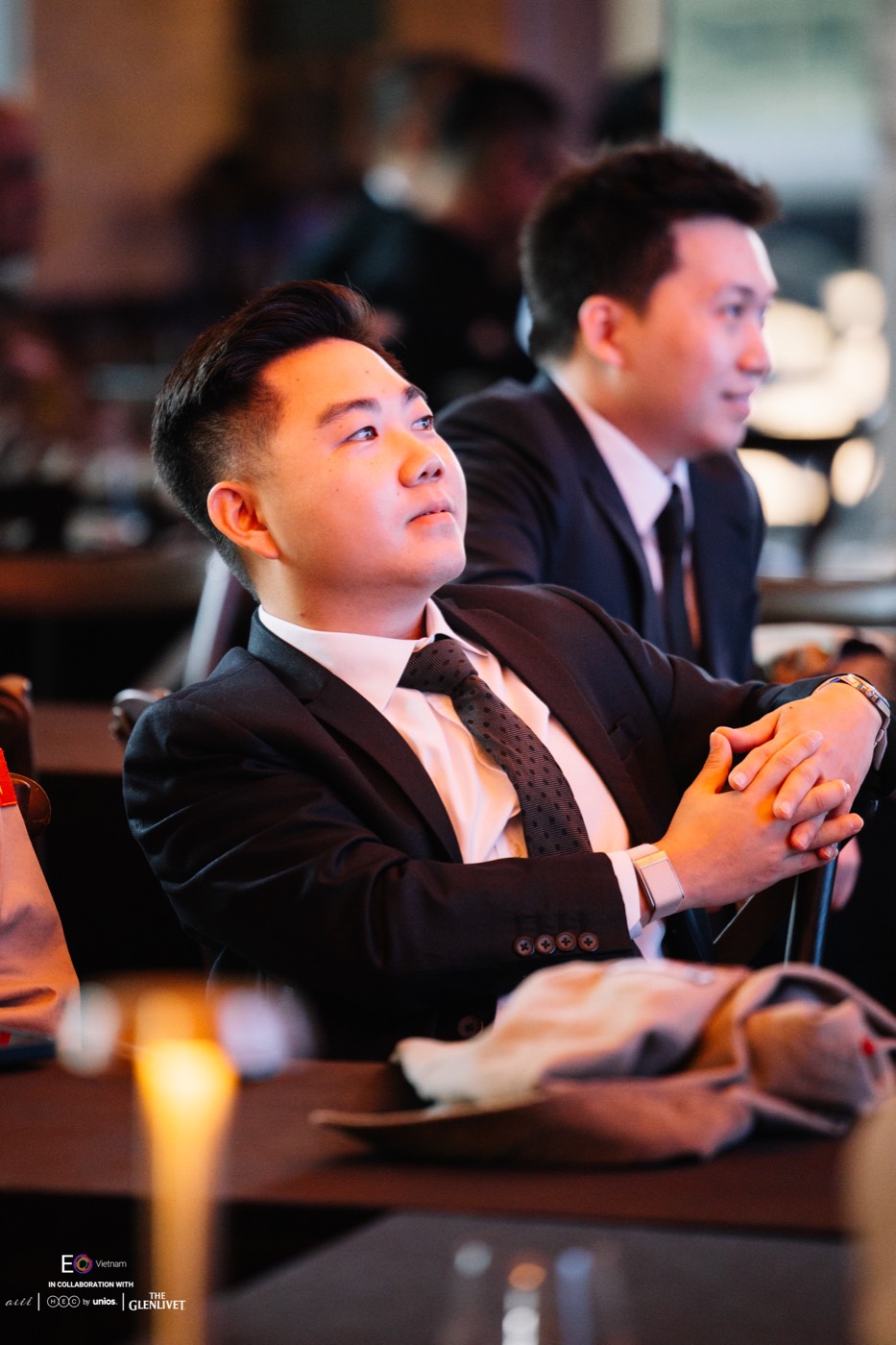
At one point, we had around 1,500 employees. We made the difficult decision to consolidate the business and bring that down to around 400 to 500 people so we could operate more efficiently and stay lean. Since then, we've grown back to around 1,200 employees and continued to achieve double-digit growth.
He says a business sometimes has to get smaller and more efficient before it can grow sustainably. His regrew while tariffs and global trade conditions kept moving.
A busy day for Bryan splits roughly four ways.
- 30%Operations
- 30%Customers and logistics
- 20%People and coordination
- 20%Longer-term decisions
In his experience, manufacturing is never short of surprises. He can plan a whole day, and a production issue, a delayed delivery or an unexpected customer problem still comes along.
Among his duties, the one Bryan genuinely enjoys is raw material planning. The factory imports its materials, so port congestion, vessel delays and typhoons are part of the job. He studies historical shipping patterns, transit times and supplier lead times, and when stock could run low before a shipment arrives, he moves the planned departure date earlier.
An example of this took place about two years ago, when typhoons backed up ports and delayed the vessels carrying the factory's materials. NS Millennium had to limit production and stretch delivery lead times, which put pressure on customer relationships and on the company's reputation.
Since then the company has been bringing shipments forward by around two weeks.
This year, with freight costs rising and shipping schedules more limited and less predictable, Bryan moved that buffer to four weeks, while balancing it against inventory costs and working capital.
One of the most satisfying feelings is when the market gets disrupted and other manufacturers are struggling with shortages or slowing down production, while our factory is still running at full speed.
Looking back at how his role has shifted since he arrived in Vietnam, Bryan said:
In the beginning, I think it's natural to want to solve everything yourself. You want to make sure things get done properly, and sometimes it's just easier to step in and fix the problem. But I've gradually realized that if everything depends on me, then I'm probably not doing a good enough job of building the team and the systems around me.
As the third generation, he's carrying forward something other people spent their lives building, and a certain amount of pressure comes with that. Bryan respects what the previous generations achieved, and knows the business can't keep doing things the same way forever.
He maintains long-term customer relationships, consistent quality and discipline on costs, carried over from the first two generations. On that foundation he wants clearer responsibilities and stronger coordination between departments, so the same problems stop coming back.
A raw-material booking confirmed one day late can mean waiting another two to three weeks for the next available vessel. Bryan found that the lost day sometimes came down to someone waiting for another person to make the decision. Being the co-founder means he's aware that when every decision needs approval, the whole organization slows down and management becomes the bottleneck.
So Bryan encourages people across departments to make the calls that sit within their own responsibilities, then report what they did to their department heads. Bigger decisions and significant risks still get escalated.
Ultimately, I want to reach a point where I can look back and say that I didn't just inherit a business and keep it running. I helped it grow, developed the people around me, and made a meaningful contribution to its next chapter.
Learning as they go
The two answers meet in the same place. Hoang Le's version is a team that makes its own calls. Bryan Loo's is a business that runs well when he is away from the detail. Both are transparent that it is a continuous learning process for them. Bryan summed it up well:
I'm still figuring things out, and I don't think there's a perfect formula for being the next generation in a family business. But if there's one thing I've learned, it's that you have to respect the past without being afraid to do things differently.
Thank you to Hoang and Bryan for their time. Interviews conducted October 2026.
Curious about us?
Entrepreneurs' Organization (EO) is a global, not-for-profit membership community of over 20,000 leading business founders and owners in more than 70 countries. EO Vietnam is a chapter of 42 founders, part of the APAC Region. It is a trusted, founder-led network built to support your growth. We welcome ambitious business owners from any industry, culture, generation, and geography.
Founders and owners of companies with more than USD 1 million in annual revenue can apply to join EO Vietnam at eovietnam.org/join.